A trading plan is often described as a list of things someone expects to happen. That framing quietly turns a plan into a forecast: the document appears useful only if the preferred path arrives. A more durable plan is conditional. It states which observations would make a question relevant, what evidence would weaken it, and what remains unknown.
Conditional planning does not claim to know the next market move. It creates a testable record of how a decision would be handled under more than one possible sequence. Later, a reviewer can compare the process with the written conditions instead of grading the plan by hindsight or by one result.
How is a conditional plan different from a forecast?
A forecast makes a claim about what may happen. A plan defines what information would be relevant if a situation develops. These are related but not interchangeable tasks. A directional opinion can be wrong while a process remains consistent, and a preferred scenario can occur without making the reasoning behind it sound.
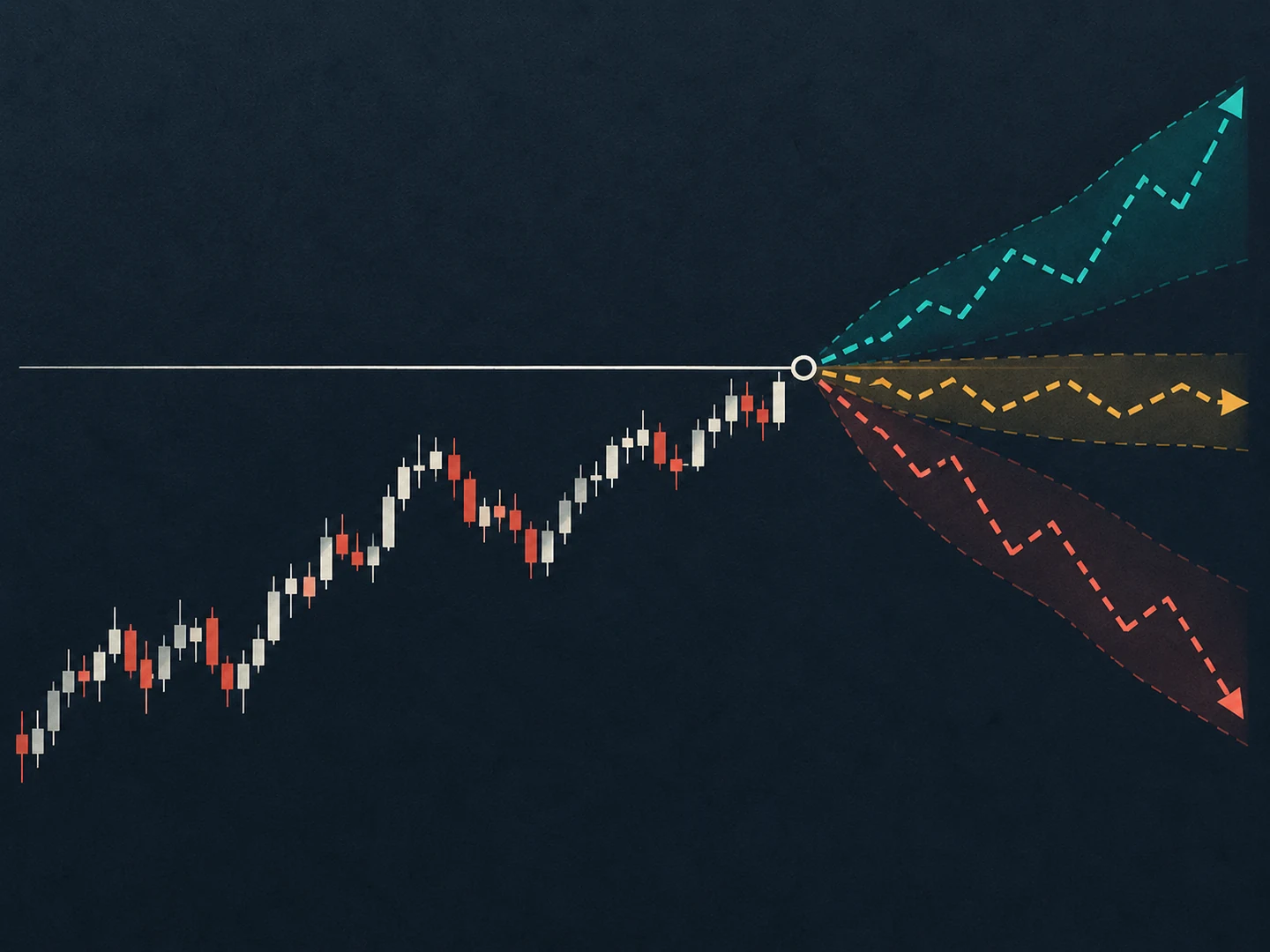
A scenario tree is therefore not a disguised prediction when it includes alternatives and uncertainty. It is a map of conditional questions: if an observable event occurs, what rule becomes relevant; if it does not, what is still unknown? The branches organize attention. They do not assign certainty, guarantee an outcome, or recommend an action in a live market.
Separate observable events from interpretation
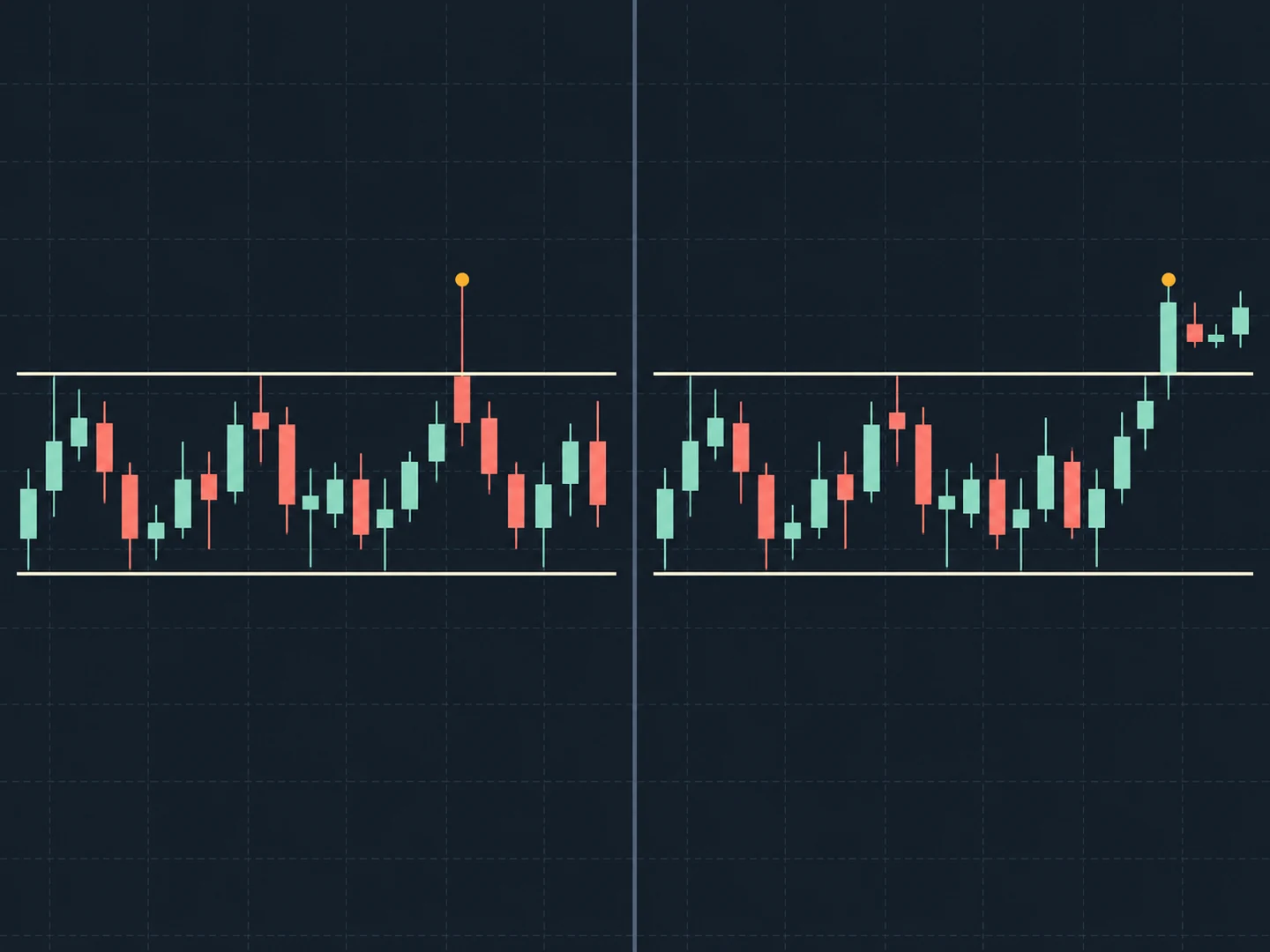
Plans become difficult to review when observation and interpretation are written as one sentence. Consider a hypothetical research rule that examines whether a completed bar is beyond a previously defined boundary. The completed-bar location is an observation. Calling it strong, weak, meaningful, or likely to continue is an interpretation that needs its own definition and evidence.
This distinction matters because interpretation can expand after the result is visible. A narrow condition may become a broad story that explains every chart. Record the exact data field, reference period, timing, and threshold used by the exercise. If a term cannot be measured or identified by another reviewer, it is not yet a reliable branch in the plan.
Build a scenario from four components
A compact scenario can be written in plain language without predicting the market. It should identify the context being studied, the observation that would make a rule relevant, the decision boundary that follows, and the condition that would make the scenario no longer applicable. The purpose is to remove ambiguity before anyone sees how the example ends.
- Context: name the market, timeframe, session, and data conditions under study.
- Observation: specify what can be seen and when it becomes available.
- Decision boundary: state which pre-written rule or review question would apply, without inventing an action after the fact.
- Invalidation: define what would make the scenario irrelevant or the data too ambiguous to evaluate.
- Unknowns: record what the scenario cannot resolve, including execution or information not represented in the exercise.
Use the same structure for the alternative branch. If the observation does not appear, if the data are incomplete, or if two reasonable readings are possible, write what the process does with that uncertainty. A plan with only a preferred branch invites selective memory. A plan with explicit alternatives can be audited even when nothing dramatic happens.
It can help to define a small vocabulary for uncertainty before writing examples. For instance, distinguish not observed, observed but ambiguous, and observed under the stated rule. These labels describe the evidence available; they do not grade the person who reviewed it. A consistent vocabulary also makes later comparisons possible because an uncertain case is not quietly recast as a clean confirmation.
Finally, keep the plan short enough to use. A large tree with many branches can create the appearance of rigor while making the process impossible to apply consistently. Begin with the few conditions that change the research question, record the unknowns, and add complexity only when a repeated review shows that a meaningful distinction is missing.
Make no action a legitimate branch
A plan that always requires activity is not merely incomplete; it changes what the exercise measures. Some sessions will not contain the defined condition. Others may contain it in a form that cannot be classified consistently. In either case, recording that no action was taken can be more informative than forcing a decision to keep the session interesting.
This branch should be written as a process outcome, not as a missed opportunity. Record whether the condition was absent, the information was ambiguous, a limit in the plan applied, or the session was not observed. Those explanations are not equivalent. Separating them helps a later review distinguish patience, a data problem, and a rule that needs clarification.
Version the plan instead of rewriting its history
Learning may lead to a changed definition. That is normal, but the change should create a new version rather than silently replacing the old one. Keep the date, the reason for the revision, the observations that motivated it, and whether the new wording was tested on the same historical examples that inspired it.
Without versioning, a plan can appear more precise than it was at the time. A reviewer may remember a condition as obvious because later edits made it obvious. Preserve the original text and compare versions side by side. If the new version was designed after seeing a particular outcome, classify that example as development material rather than independent confirmation.
Review consistency, not clairvoyance
A useful review asks whether the scenario was defined before the outcome, whether the relevant observation was recorded at the correct time, whether the same rule was applied across comparable cases, and whether exceptions were explained. These questions evaluate the plan as a process. They do not require the author to know which branch will occur.
Outcome summaries still matter, but they are one part of a larger record. A handful of examples cannot establish that a scenario will remain useful in other conditions. Compare more than one period, retain cases that contradict the idea, and document changes in data or execution assumptions. The goal is a clearer question, not a confident-sounding forecast.
Sources and further reading
- Building a Trade PlanCME Group