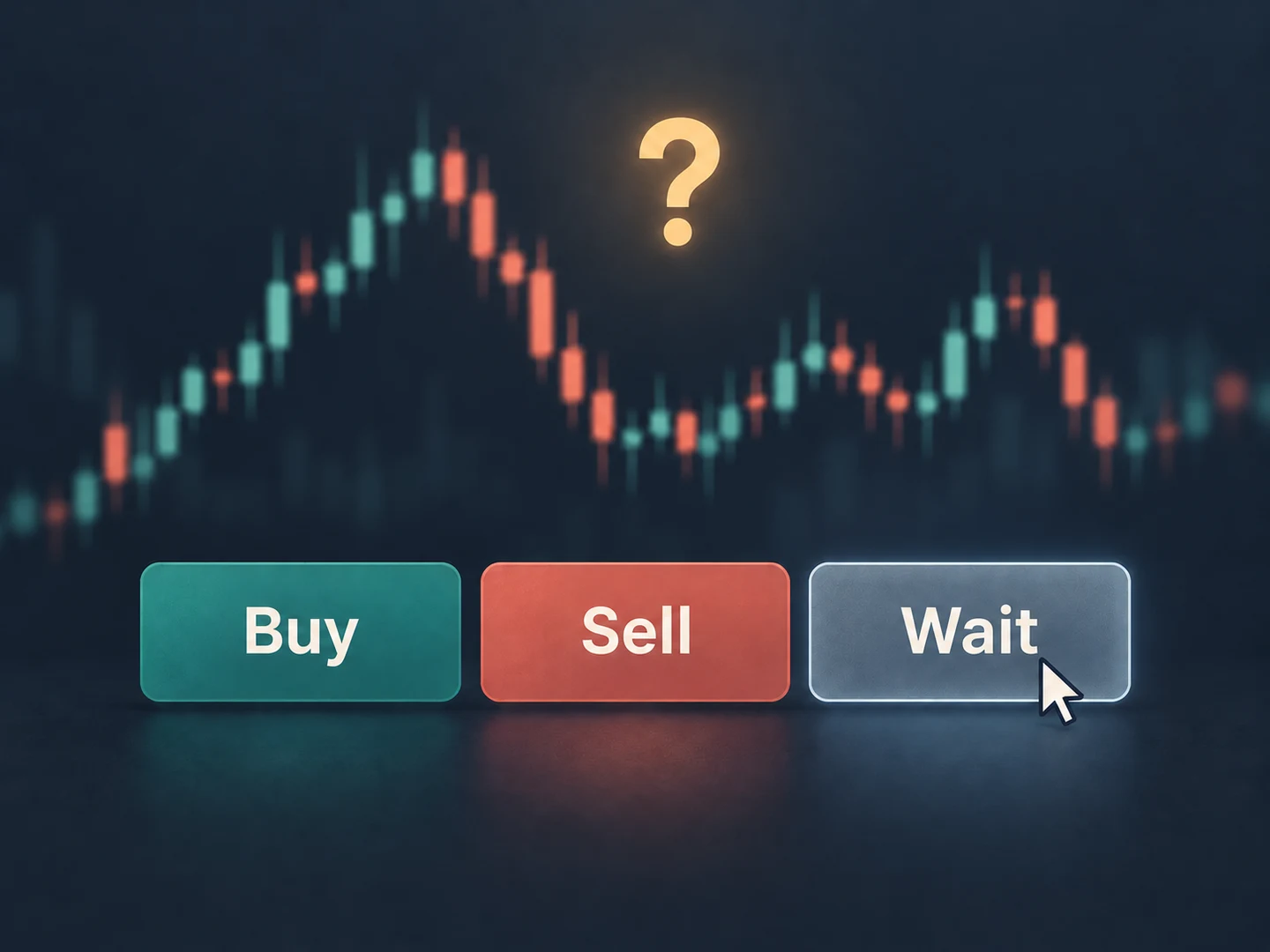
When a chart becomes uncertain, clicking Buy or Sell can feel like making progress. Waiting can feel passive, as if a decision has been postponed or an opportunity allowed to pass. That feeling is worth examining, but it cannot tell us which choice was better. A trading review needs to distinguish the discomfort of inaction from evidence that action would have improved the decision.
Behavioral researchers sometimes use the phrase action bias for a tendency to prefer doing something over doing nothing. The idea is easy to recognize in hindsight: an intervention is visible, while a decision to wait can leave no obvious trace. In trading, however, that recognition is a question to investigate, not a diagnosis to assign to every trader or every active decision.
What does the goalkeeper research actually show?
A widely discussed 2007 study examined penalty kicks and the choices of elite soccer goalkeepers. The authors compared outcomes when goalkeepers stayed near the center with outcomes when they dived to either side. They argued that, given the observed distribution of kicks and saves, remaining central could sometimes have a higher chance of stopping the shot, even though goalkeepers mostly dived. Their survey also suggested that goalkeepers could feel worse about conceding after staying still than after diving.
That result helped make action bias memorable, but it should not be shortened to “acting is irrational.” A 2026 replication and reanalysis examined a different set of 292 on-target Men’s World Cup penalties from 1982 through 2022. Its authors reported statistically similar save chances for jumping and staying central in their sample, and noted that kicks went to the sides more often than to the center. They argued that the frequency of diving alone does not establish a suboptimal bias.
The disagreement is useful. It shows how a behavioral claim depends on the comparison set, the available alternatives, and the denominator. The sports findings are not a test of traders, and the settings differ sharply: a goalkeeper faces a single kick with limited time, while a trading decision unfolds under different information, rules, costs, and review horizons. Use the analogy to formulate a question, not to import a conclusion.
Why can visible action feel safer?
One possibility is that action creates a clear story: a person noticed something and responded. Waiting can be harder to explain because its value often depends on conditions that did not occur. This is a plausible review hypothesis, not proof of a universal psychological mechanism. Your journal can show whether you personally judge an active choice more kindly than an equally well-supported decision to stand aside.
A second possibility is that outcomes are easier to remember than the decision set. A trade that later moves in the anticipated direction attracts attention, even if the entry did not meet the written criteria. A no-trade session has no realized profit or loss to summarize, so it can disappear from performance narratives. Counting only completed trades then makes activity look more informative than it is.
Finally, “wait” can mean several different things. It may mean a pre-defined condition has not appeared; the available chart is ambiguous; data are missing; the setup is outside the plan; or the reviewer has avoided making a decision. Those cases should not be bundled together. A useful audit asks what the person knew, what rule applied, and what would have changed the classification.
Compare decisions on the same footing
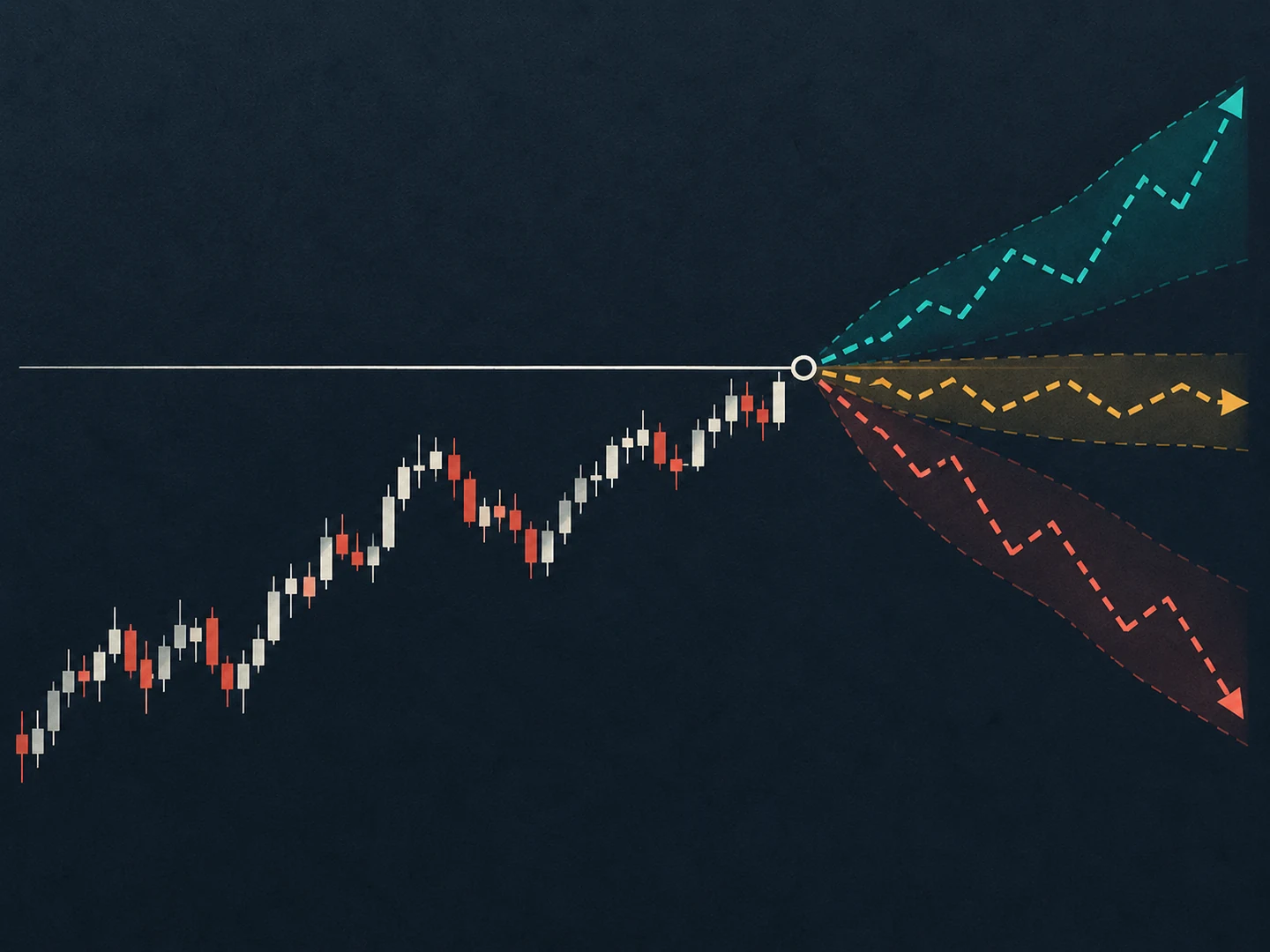
Before comparing action with waiting, define the opportunity set. Pick a review unit, such as every eligible scenario in a historical replay or every decision window that met a written screening rule. Include all eligible cases, not just memorable winners, losses, or trades that were eventually entered. Otherwise the review can select its denominator after seeing the outcome.
- Record the information available at the decision time, including chart state, session, data quality, and any relevant constraints.
- Write the rule or condition that made Buy, Sell, Wait, or “not classifiable” a candidate label. Do not infer the rule from what happened later.
- Separate process quality from outcome. A favorable outcome does not repair a rule violation; an unfavorable outcome does not by itself prove a sound process was wrong.
- For a hypothetical alternative, state exactly what “act” or “wait” would have meant and which later observations are used to compare them.
- Keep no-trade and ambiguous cases in the record, with reasons, so that the review can show what was excluded and why.
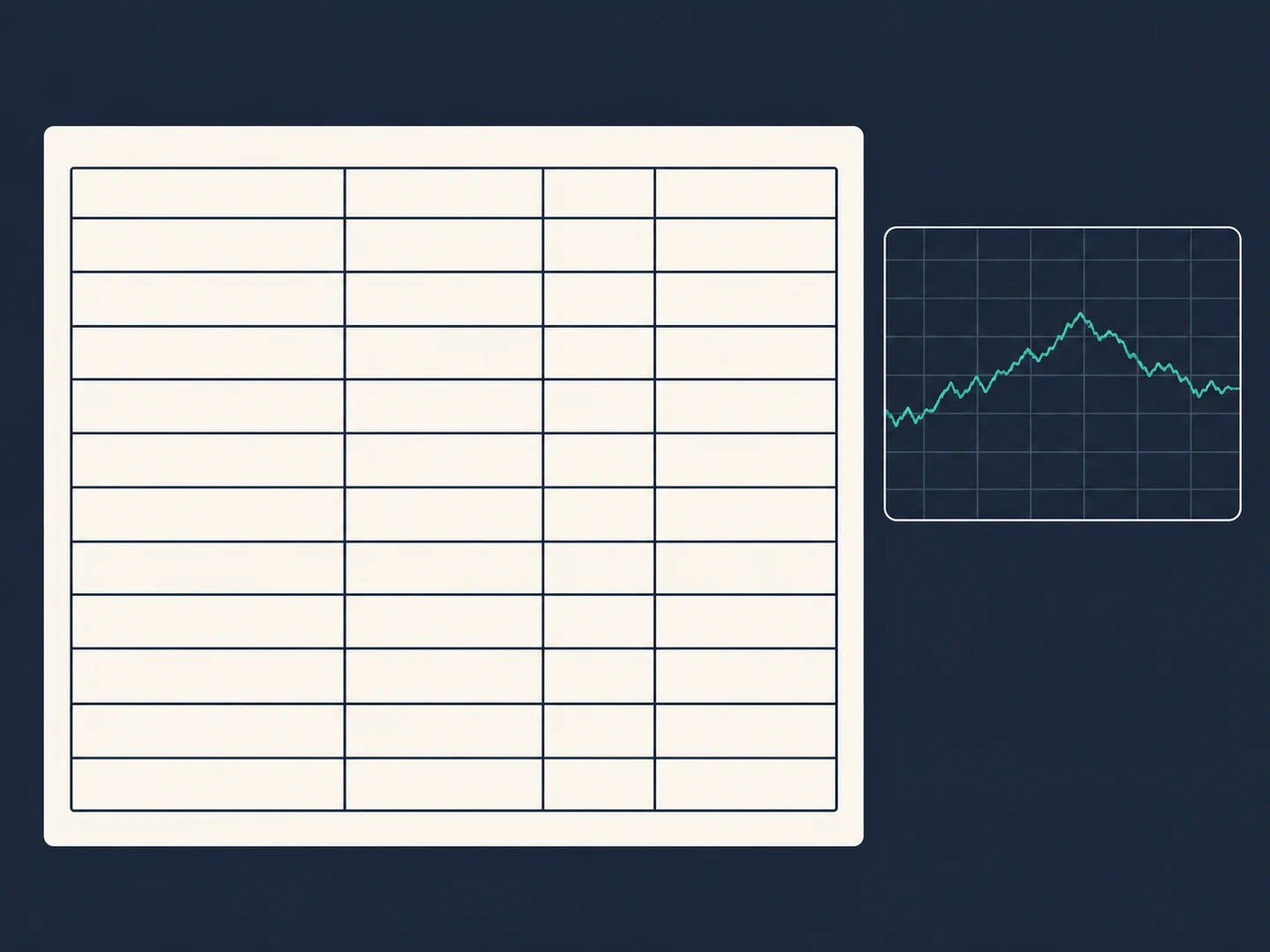
If possible, use a consistent replay protocol or have a second reviewer classify a sample without seeing the later outcome. Disagreements are informative: they may reveal that a label such as “clear opportunity” is not operationally defined. A chart screenshot and a timestamp can help preserve what was visible, but neither replaces the rule that explains why a decision was eligible.
Make waiting a decision you can review
Waiting is easier to assess when it has a stated reason and a condition for reconsideration. For example, a replay exercise might record: “No defined condition is present at this timestamp; review again only if the pre-written observation appears.” This is not a market forecast or a recommendation. It is a way to make the exercise observable and prevent the word “wait” from becoming an empty label.
A journal entry can distinguish deliberate waiting from unresolved hesitation. Deliberate waiting points to a rule, missing information, or an explicit uncertainty. Hesitation may instead involve a rule that exists but is repeatedly ignored, or a decision boundary that was never made clear. Both are reviewable, but they suggest different questions. Avoid relabeling hesitation as discipline merely because no trade occurred.
The reverse also matters: do not relabel action as impulsive just because it lost. Ask whether the action met the same pre-stated criteria that would have made it eligible before the outcome was known. A useful review is symmetrical. It subjects action and inaction to the same timing, evidence, and record-keeping standards.
What evidence would support an action-bias concern?
A single regretful session is weak evidence. Look for a repeated pattern across a pre-defined set of comparable cases: for example, decisions to act when the written condition was absent, paired with a tendency to describe otherwise similar waits as missed opportunities. This still would not prove a psychological cause, but it would identify a process pattern worth examining.
Track counts and rates with their denominators. How many eligible decision windows were there? How many were acted on, deliberately passed, ambiguous, or unavailable because of missing data? What proportion of each category met the written process criteria? If cases differ by market, timeframe, session, or volatility regime, report those groups separately where the sample permits. Do not treat a handful of examples as a stable estimate.
Counterfactual outcomes deserve special caution. A replay can calculate what would have happened under an alternative rule, but it cannot guarantee that a live person would have received the same fill, followed through, or tolerated the same path. Costs, latency, slippage, and changing information matter. State the assumptions and call the result a scenario analysis, not a recovered profit.
Keep the conclusion narrower than the story
The goal is not to make waiting virtuous or action suspect. A well-defined process might call for action in some cases and waiting in others. The review question is whether the choice matched the plan and the evidence available at the time, and whether the same standard was applied across both outcomes.
If your records suggest a preference for visible activity, treat that as a prompt to improve measurement: define eligible cases, preserve no-trade decisions, record reasons before outcomes, and compare alternatives under explicit assumptions. If the data do not show a pattern, do not force the action-bias label onto them. A careful review can end with uncertainty; that is more honest than turning one memorable chart into a general rule.
Sources and further reading
- Action bias among elite soccer goalkeepers: The case of penalty kicksJournal of Economic Psychology
- Replication: No action ‘Bias’ among elite soccer goalkeepers during penalty kicksJournal of Economic Psychology