A backtest can use the right formula and still answer an impossible question. The failure occurs when a historical decision receives a value, label, universe member, or transformation that would not yet have been available at that point. Because the leak is often quiet, the resulting curve may appear internally consistent while describing information access that never existed.
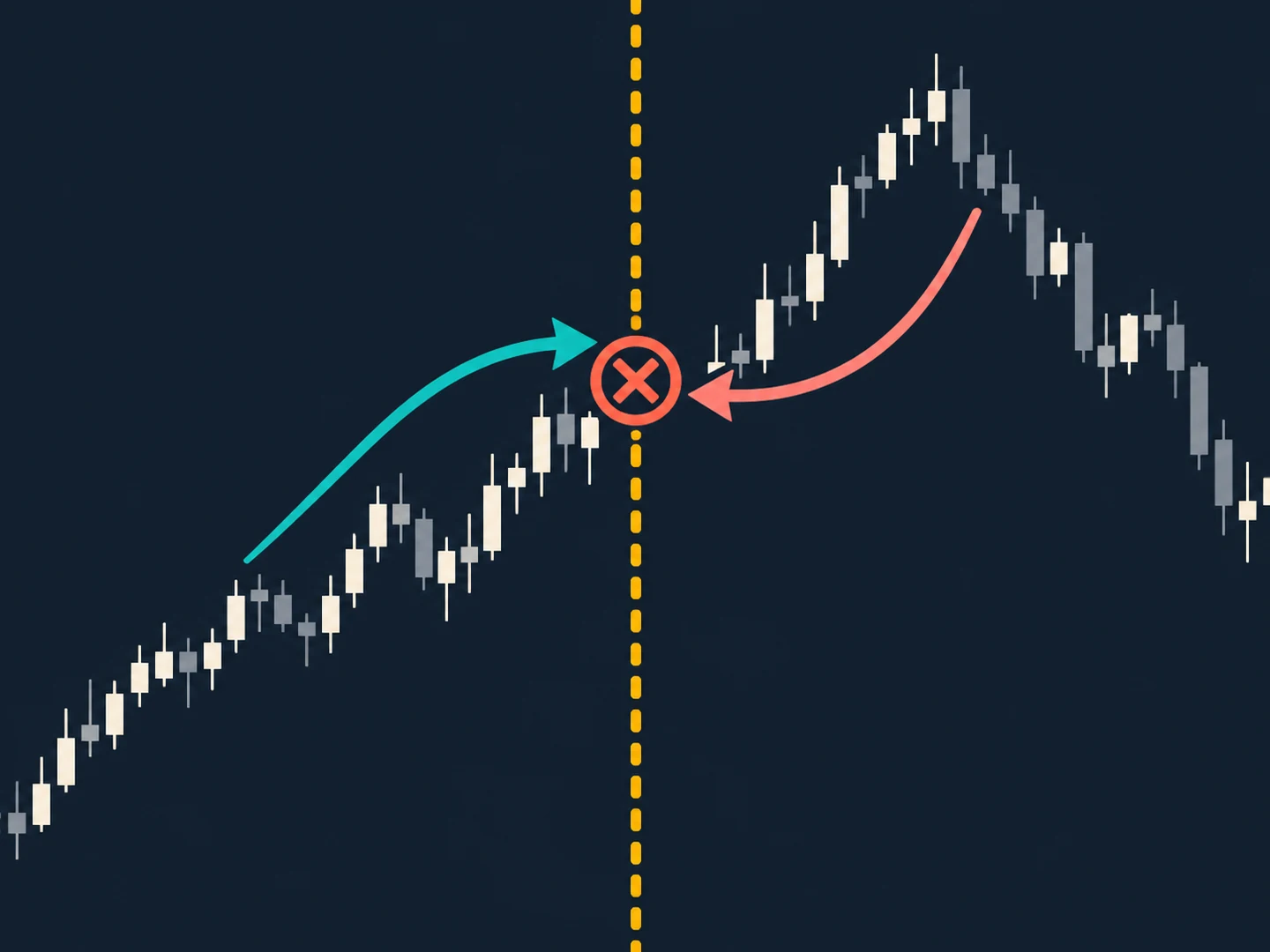
Look-ahead bias is not limited to a programmer deliberately reading tomorrow's price. It can enter through a date convention, a revised data series, a feature calculated across the full sample, or a research choice made after examining the period later called a test. The central audit question is simple: when could this exact information have been known?
When is information available to a backtest?
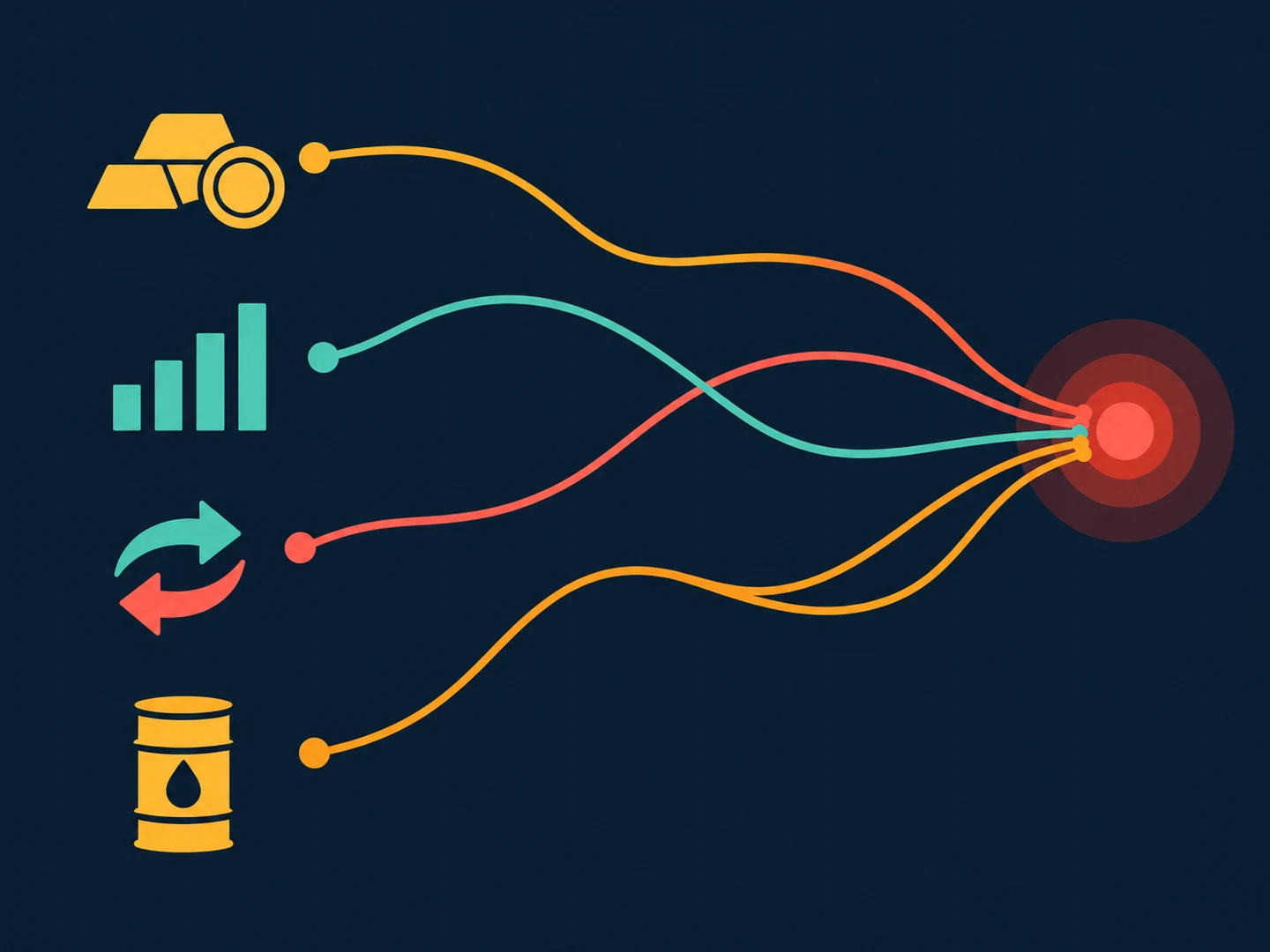
A record often has several relevant timestamps: when an event occurred, when a provider published it, when the dataset captured it, and when a strategy could consume it. A date attached to a record is not automatically its availability time. If a daily value is labeled with the day it summarizes, an intraday process cannot assume it knew the final value at the day's start.
The same issue appears in corporate announcements, economic releases, index membership, delayed reports, and data corrections. A current database may contain a polished history that includes revisions made later. A valid historical simulation needs the version that was available then, or a conservative delay that prevents the revised information from arriving early. Document the convention instead of inferring it from column names.
Common leakage paths in a research pipeline
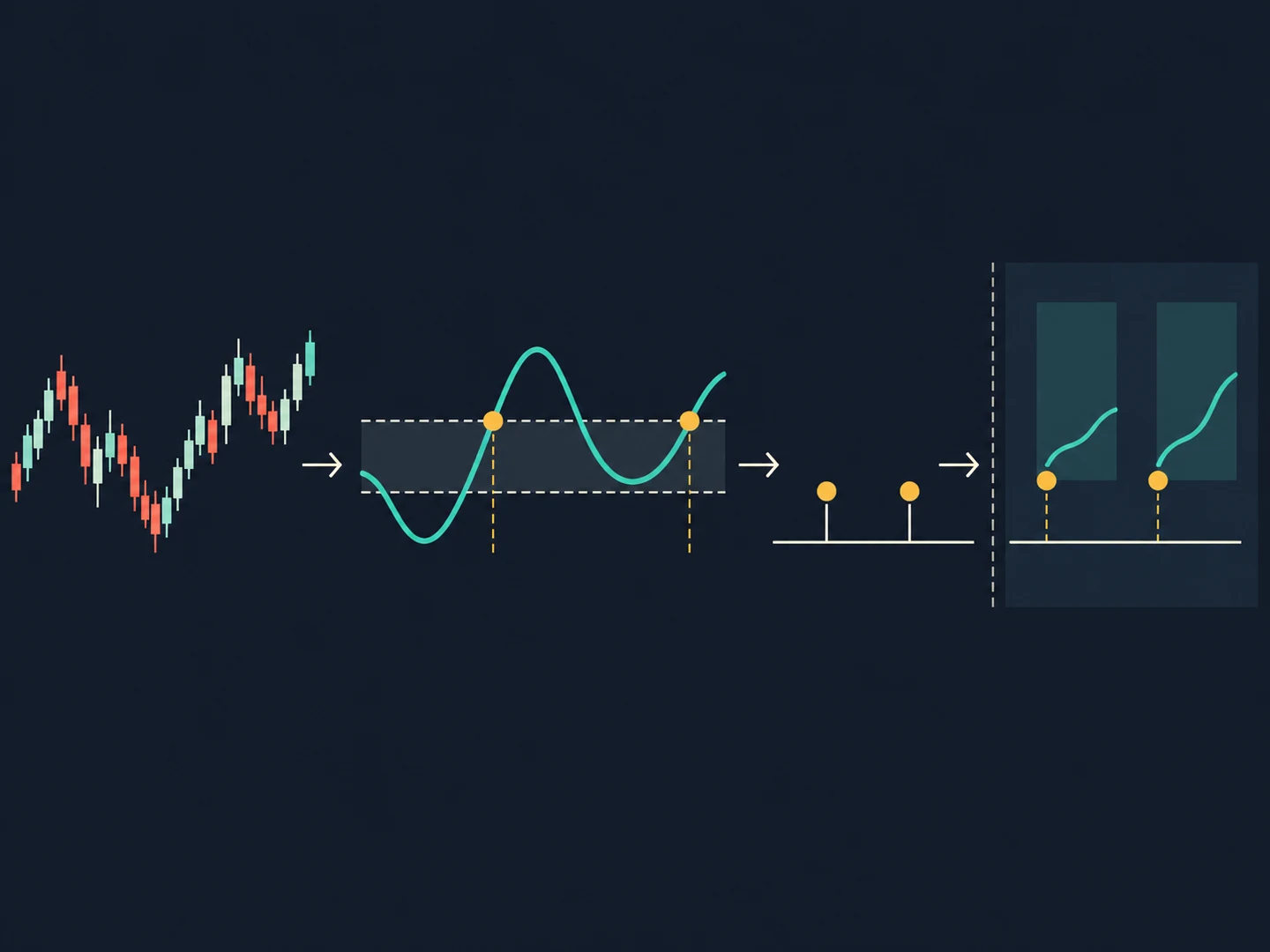
A leak can enter before the rule is evaluated. Examples include normalizing a feature with the mean and variance of the full dataset, choosing thresholds after viewing the holdout, filling missing values using later observations, or calculating a rolling statistic with centered rather than trailing windows. A model's target can also overlap with its inputs when labels and features use inconsistent horizons.
- Timestamp mismatch: a bar or event is consumed before its true publication or close time.
- Full-sample transformation: scaling, imputation, filtering, or feature selection uses later observations.
- Universe leakage: the historical universe reflects instruments or membership known only later.
- Label overlap: target windows cross split boundaries or encode information beyond the decision time.
- Selection leakage: many variants are tested and the same period is then presented as untouched evidence.
No single checklist catches every leak. A pipeline can avoid explicit future indexing yet still use a vendor table revised after the fact. Conversely, a delayed field may be safe if its availability convention is documented. Think of the entire path from raw source to order simulation, not only the line of code that produces the signal.
Audit information at the decision frontier
For each input, write an as-of question: what value would the research process have seen at this exact time? Where possible, store event time and availability time separately, preserve source versions, and use trailing transformations fitted only on earlier observations. Split training, validation, and later evaluation chronologically when the problem has a time direction.
Then inspect boundary cases. If a feature is calculated from completed bars, identify whether the decision occurs at bar open, intrabar, or after close. If a report becomes available after a session, move its use to the first eligible later decision. If the timestamp rule is uncertain, test a conservative lag and label it as a sensitivity check rather than claiming exact availability.
Use tests that can reveal a leak
A useful audit is more than a search for future-looking indexes. Trace a few decisions end to end: source row, timestamp, transformation window, feature value, rule evaluation, order time, and assumed fill. Recompute one example by hand or with a small fixture. The objective is to make the information boundary observable and to catch a mismatch before aggregate performance hides it.
- Shift one input later and confirm that earlier decisions cannot consume it.
- Fit transforms on the training period only, then freeze them for validation.
- Check whether changing a future observation alters a decision made before it.
- Record when each variant was selected and which periods influenced that choice.
- Inspect a sample of simulated fills separately from the signal timestamp.
These tests do not prove that every source is point-in-time correct. They are diagnostic probes. A pipeline should retain data lineage, version assumptions, code versions, and known limitations so another analyst can reproduce the information available at each decision frontier. If a source cannot support that claim, narrow the conclusion.
Do not confuse a clean split with independence
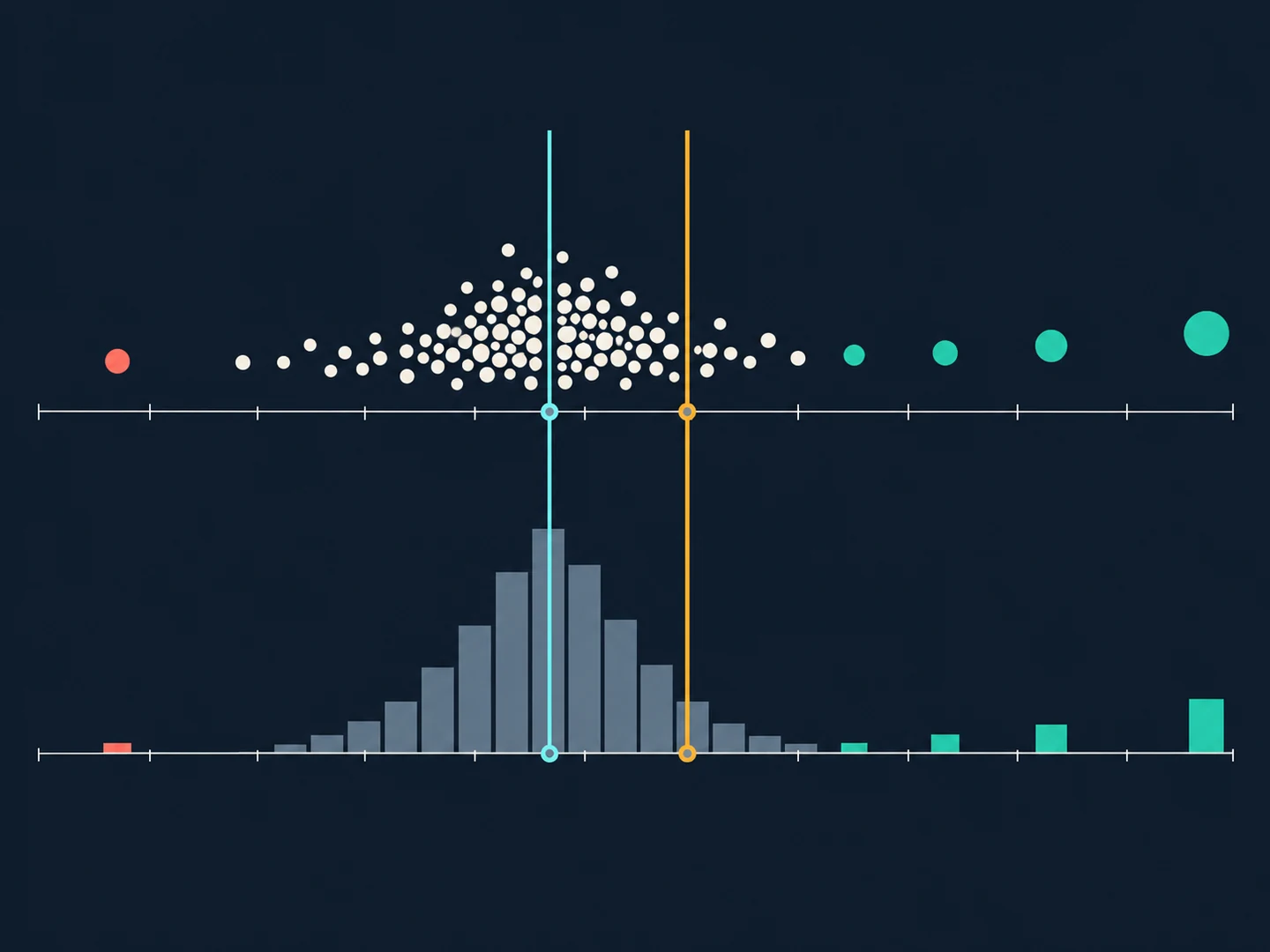
Chronological train and test periods reduce one obvious form of leakage, but they do not erase all research choices. Repeatedly inspecting a test period and adjusting the model makes that period part of development. Searching many parameters, features, or universes can also select a result that fits quirks in the historical sample, even if no individual field literally contains a future value.
Record the number and nature of experiments, including discarded ones. Keep a final period untouched until the method is fixed, and be honest if it has already been viewed. A walk-forward design can represent repeated refitting more faithfully for some questions, but it still depends on valid data timing and a pre-specified procedure. No split turns historical evaluation into certainty about future behavior.
Separate signal timing from execution assumptions
A signal that is computed after a bar closes cannot automatically be treated as if it were known at the bar's opening price. Likewise, a price touched somewhere inside a bar may not establish the sequence of events needed for a simulated fill. Keep information time, order submission time, and fill modeling as separate assumptions. A point-in-time signal does not make an unrealistic execution model realistic.
A replay environment can help inspect what was visible one step at a time, but it cannot certify a data vendor's publication timestamps. DayTradeDrill's intrabar prices are synthesized from one-minute OHLC inputs and simulated fills are not exchange ticks or broker fills. Treat replay as a review aid, not as proof of historical availability or executable results.
Write a point-in-time evidence note
A concise evidence note makes the backtest easier to question. State the decision timestamp, source and availability conventions, transformation windows, split design, model-selection history, order timing, and unresolved caveats. Add one example showing the path of a value from source to decision. If a reviewer cannot tell what was knowable at that moment, the performance summary is premature.
- Separate an indicator calculation from a testable rule
- Read trade outcomes beyond one average
- Open a replay practice session
Sources and further reading
- Custom Data Key Concepts: Avoid Look-Ahead BiasQuantConnect documentation
- Optimization Parameters: Overfitting and Look-Ahead BiasQuantConnect documentation